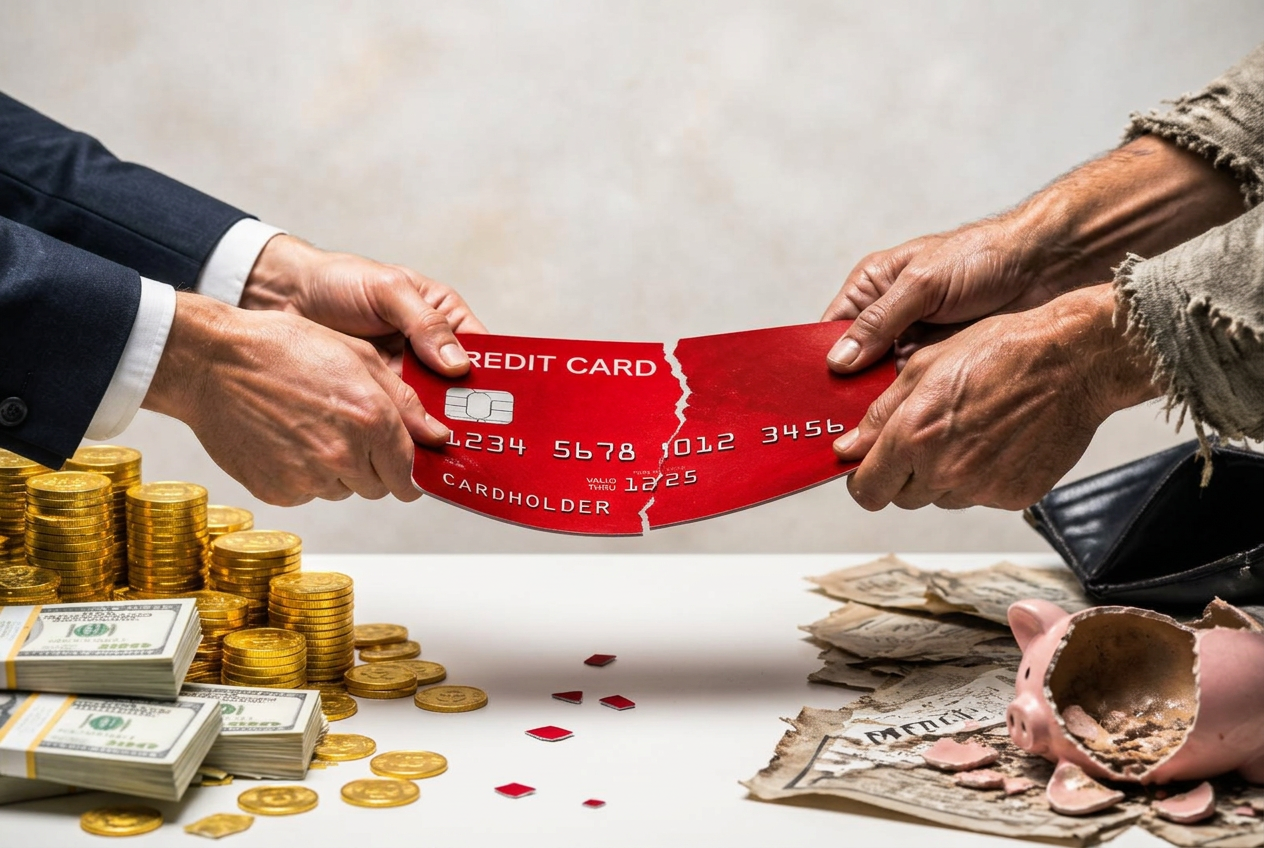
Minimum Payments Are Designed To Keep You There
A $5,000 balance at 22% APR, paid at the typical 2% minimum, takes over twenty years to clear and costs more in interest along the way than the original balance you borrowed. That is not an accident, and it is not a failure on your part — it is the product working exactly as it was designed to. The minimum payment printed on your statement is the lender's business model, not a repayment plan for you.
Understanding this is the first real step toward freedom, because it removes the shame that keeps so many people quiet about card debt. Millions of otherwise careful, capable people carry a balance that feels impossible to shift. It feels that way because the system is built to make it feel that way. Once you see the mechanics clearly, you can work around them instead of against yourself.
The good news sits right alongside the bad: because the trap is mechanical, the escape is mechanical too. Change the interest rate, change the payment amount, and stop adding new charges, and the same debt that looked permanent starts moving in a very different direction — often faster than people expect once they actually run the numbers.
How the Interest Actually Works
Card interest is charged daily on your average daily balance, not just once a month. Carry any balance and you also lose the interest-free grace period on new purchases, so every coffee, every tank of petrol, every small top-up starts accruing interest from the moment it is charged. This is precisely why "I'll pay it off next month" so often turns quietly into four years — the grace period that made the card feel free disappears the instant a balance rolls over, and few people notice the switch happen.
This also explains why paying slightly more than the minimum makes such an outsized difference. Because interest compounds daily on whatever is left, every extra dollar you send today stops accruing interest for every single day afterward. Small, consistent overpayments compress a decades-long timeline into a handful of years far more dramatically than most people expect.
The Escape Sequence
STOP USING THE CARD
Pay more than the minimum — always
Cut the rate
Attack one card at a time
AUTOMATE THE PAYMENT FOR THE DAY AFTER payday

Balance Transfers: Useful, With One Rule
A 0% balance transfer for 18 to 24 months can eliminate interest entirely while you attack the principal directly. The transfer fee, usually 3 to 5%, is almost always worth paying against an ongoing 22% APR — you are trading a one-off small cost for many months of zero interest. The rule that makes or breaks a transfer is simple and absolute: never spend on the new card. Purchases usually sit outside the promotional rate, and payments are applied in ways that quietly keep the expensive portion of the balance alive the longest.
To use a transfer well, divide the balance by the number of promotional months and pay exactly that amount every month without fail. Do the maths on day one, write the number down somewhere visible, and treat it the same way you would treat rent — non-negotiable, automatic, and paid before anything discretionary happens with the rest of your income.
| Option | Best for | Watch out for |
|---|---|---|
| Ask issuer for a lower rate | Anyone with a decent payment history on that card | May be temporary — confirm how long it lasts |
| 0% balance transfer | Balances you can clear within the promo window | 3–5% fee, and interest resumes hard afterward |
| Debt consolidation loan | Multiple cards, fixed payment preferred | Only helps if the cards stay cleared afterward |
A transfer only works if the old habit stops
Moving a balance without changing the spending that created it simply relocates the problem for a year or two. Pair any transfer with the "stop using the card" step above, and treat the promotional period as a countdown, not a pause.
The card is not the enemy — the balance is. Clear it once, properly, and it never has power over you again.
Worth repeating on hard days
Should You Close the Card Afterwards?
Usually, no. Closing an old account shortens your overall credit history and pushes your utilisation ratio up, both of which can lower your credit score right when you most want it climbing. A better approach: cut the plastic in half so you cannot use it impulsively, keep the account itself open with a zero balance, and if the issuer tends to close dormant accounts, put one small recurring bill on it and pay it off automatically each month.
This way you keep the length of your credit history working in your favour while removing every practical temptation to run the balance back up. The card becomes a piece of your credit file rather than a tool in your wallet.
Common Traps to Watch For
Avoid these while you pay it down
- Cash advances — interest accrues from day one with no grace period, plus a separate fee.
- Buy-now-pay-later plans stacked on top of cards — it is debt wearing a friendly costume.
- Paying one card with another and mistaking the shuffle for progress.
- Keeping a card 'for emergencies' instead of building a real emergency fund.
- Reopening a cleared card the moment a big expense appears.

Will calling to ask for a lower rate actually work?
Is it better to pay off one card fully or spread payments across all of them?
What if my card debt feels too large to ever clear?
Does paying down a card improve my credit score quickly?
The short version
- 01Minimum payments are built to keep a balance alive for decades — treat them as a floor, not a plan.
- 02Daily compounding means small extra payments shrink the timeline dramatically.
- 03Stop new spending on the card first — every other step works better once the bleeding stops.
- 04A 0% balance transfer is powerful only if you never spend on the new card.
- 05Keep cleared accounts open with a zero balance rather than closing them.
- 06Watch for cash advances, buy-now-pay-later stacking, and the temptation to reopen 'just for now'.
Clear the cards and you free up the single largest recurring cost in most household budgets. That freed-up payment becomes the seed for everything that comes next — whether that is a stronger emergency fund, a faster run through your chosen payoff method, or simply a budget that finally works without a card debt eating into it every month.